
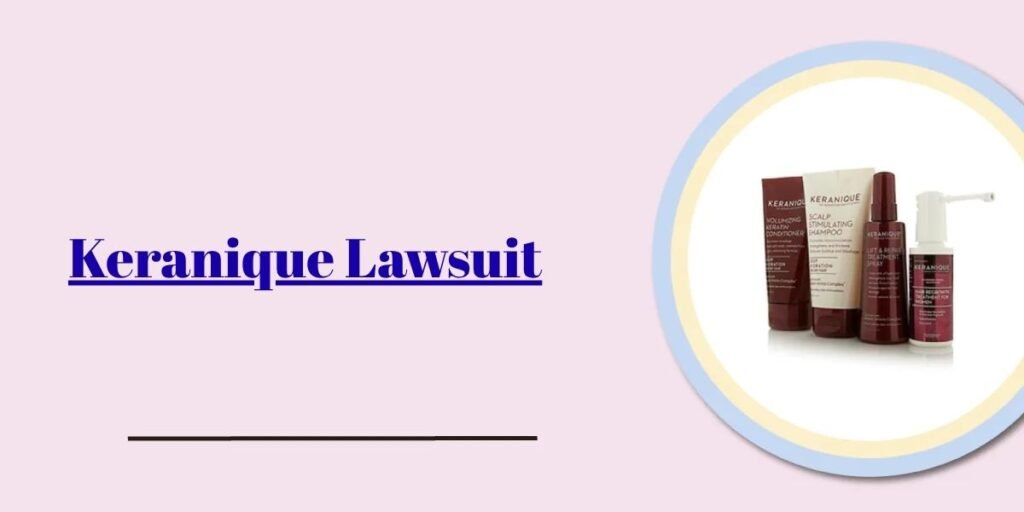
A class action lawsuit filed against the makers of Keranique targeted a prominent marketing claim displayed on the brand’s topical hair-regrowth packaging. The litigation centered on the assertion that Keranique’s product was the only FDA-approved topical solution for women’s hair regrowth.
The complaint alleged that this representation was false and misleading because multiple other companies manufacture and distribute FDA-approved topical minoxidil 2% solutions formulated for women. According to the lawsuit, consumers were led to pay a premium price based on a false perception of regulatory exclusivity.
Understanding the legal arguments, regulatory backdrop, and practical resolution of this case provides valuable insight for consumers evaluating over-the-counter hair-loss treatments and marketing claims.
What the Keranique Class Action Alleges About FDA Approval
The lawsuit, styled as Pitre v. Scientific Hair Research, LLC, et al. (Case No. 3:25-cv-11045), was initiated by named plaintiff Yolanda Pitre in the U.S. District Court for the Northern District of California. The complaint named Scientific Hair Research, LLC and Profectus Beauty, LLC as defendants, identifying them as the corporate entities responsible for marketing and distributing Keranique products.
At the heart of the complaint was the front-label statement across Keranique topical hair-regrowth packages claiming the product was the only FDA-approved topical solution for women’s hair regrowth. The plaintiff alleged that this language explicitly communicated to shoppers that no other topical hair-regrowth product on the market possessed approval from the U.S. Food and Drug Administration (FDA) for female use.
The lawsuit maintained that this marketing copy was factually inaccurate. These statements represented civil allegations in a court filing, not formal findings of fault or final judicial determinations that the defendants engaged in illegal conduct.
Why Minoxidil 2% Became Central to the Dispute
The active ingredient in the Keranique products at issue is topical minoxidil 2%. Minoxidil is a well-established, over-the-counter hair-regrowth treatment that received initial FDA approval for female pattern hair loss under brand names such as Women’s Rogaine.
The complaint cited official FDA Orange Book records to show that several pharmaceutical and consumer health companies hold valid, active FDA approvals to produce topical minoxidil 2% solutions for women. Approved generic and brand-name alternatives identified in market filings included products sold under labels such as Hers, CVS Health, Walgreens, Equate (Walmart), and Up&Up (Target).
This distinction highlighted the core legal argument: while an individual product containing minoxidil 2% can be FDA-approved, advertising that specific brand as the single or unique approved option on the market confuses the regulatory status of the active ingredient with brand exclusivity.
The Price Difference Behind the False Advertising Allegations
The financial motive alleged in the lawsuit involved the price differential between Keranique and competing FDA-approved treatments.
According to figures cited in the complaint, Keranique was sold for approximately $14.49 per ounce. By contrast, generic or competing brand-name topical minoxidil 2% solutions were reportedly available to consumers for as little as $4.97 per ounce, representing less than one-third of Keranique’s price for the same active ingredient at the same concentration.
The plaintiff argued that consumers paid a substantial price premium because they reasonably believed Keranique offered a unique, proprietary solution that no competitor could lawfully sell. The filing argued that had consumers known identical FDA-approved alternatives were available at significantly lower prices, they would not have purchased Keranique or would have paid substantially less for it.
The Consumer Protection Laws at the Heart of the Case
The lawsuit relied on several established statutory consumer protection frameworks under California state law:
- Consumers Legal Remedies Act (CLRA): Prohibits unfair methods of competition and deceptive trade practices, including misrepresenting the approval, characteristics, or exclusivity of consumer goods.
- False Advertising Law (FAL): Outlaws publishing or disseminating statements about products that are untrue or misleading, and which are known or should be known to be misleading.
- Unfair Competition Law (UCL): Prohibits unlawful, unfair, or fraudulent business acts and practices, allowing consumers to seek restitution for funds acquired through deceptive marketing.
- Breach of Express Warranty: Asserts that the front-label statement constituted an explicit promise regarding the product’s regulatory exclusivity that failed to conform to reality.
The complaint focused directly on how the front-label packaging affected reasonable consumer purchasing decisions.
What Happened to the Keranique Class Action?
The procedural history of the case progressed through initial federal court filings:
- Complaint Filed: Yolanda Pitre filed the class action complaint on December 29, 2025, in the U.S. District Court for the Northern District of California.
- Answer Submitted: Defendants Scientific Hair Research, LLC and Profectus Beauty, LLC filed a formal answer denying liability on March 9, 2026.
- Stipulated Dismissal: On June 11, 2026, the parties filed a stipulated dismissal with prejudice, which was recorded on the official docket on June 12, 2026.
A dismissal with prejudice indicates that the specific claims brought by the named plaintiff in that action cannot be refiled by that plaintiff. The court did not issue a final ruling on whether the advertising claims were legally false, nor did the public record establish a court-approved class-wide monetary settlement or admission of liability.
Does the Keranique Lawsuit Mean Consumers Can Claim Compensation?
The filing of a proposed class action lawsuit does not automatically guarantee a settlement fund or consumer compensation. Because this lawsuit concluded with a stipulated dismissal rather than a confirmed class action settlement agreement, there is no public claims process, claim form, or compensation pool created by this proceeding.
Consumers should exercise caution regarding online notices claiming money is available from this lawsuit. Valid consumer class action settlements require formal preliminary approval from a judge, official class notice distribution, and a court-supervised settlement website before claims can be submitted.
Read More: How to File a Civil Lawsuit in Court: A Complete Step-by-Step Guide for U.S. Plaintiffs
How This Case Differs From Earlier Keranique Litigation
This false-advertising case is distinct from earlier, unrelated legal proceedings involving the brand. In 2020, a separate product-liability lawsuit was filed against Keranique entities alleging personal injury and hair damage. That earlier proceeding was formally dismissed with prejudice in April 2021.
The 2020 litigation involved physical injury allegations, whereas the 2025–2026 action dealt strictly with marketing statements, FDA approval phrasing, and pricing premiums. Neither case established judicial findings of product defect or illegal advertising.
What Keranique Buyers Should Take Away From the Case
Evaluating over-the-counter hair-regrowth options requires looking past front-label marketing slogans to compare active ingredients and unit prices directly. Over-the-counter treatments that contain minoxidil 2% share the same foundational active compound regardless of whether they carry a national brand name or a store-brand label.
Understanding FDA approval status is essential when evaluating health and beauty products. When the FDA approves a non-prescription treatment like topical minoxidil 2%, that regulatory status applies to the drug compound and concentration level rather than granting exclusive rights to a single retail brand.
Price differences across hair-care products often reflect branding, packaging, and accompanying cosmetic ingredients rather than differences in the active hair-regrowth medication. Checking the Drug Facts panel, calculating the cost per fluid ounce, and reviewing the complete formula helps consumers make informed purchasing decisions that fit both their personal care needs and their budget.
If you want to read more about consumer lawsuits, product-related allegations, and legal disputes involving businesses, these related articles may also be useful: