
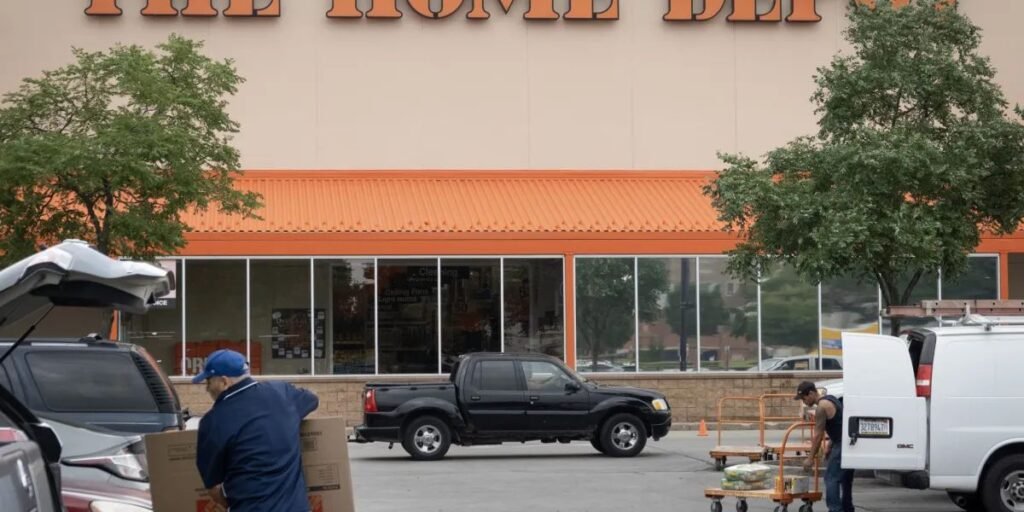
Legal disputes involving large retail corporations often generate widespread confusion across consumer forums, but examining primary court records brings immediate clarity. The proposed class-action lawsuit concerning Home Depot tool-rental Damage Protection targeted specific billing practices rather than ordinary merchandise protection plans sold with retail goods.
Plaintiff Randall Simmons filed the proposed class-action complaint against Home Depot USA Inc. in the U.S. District Court for the Northern District of Georgia.
The central allegation in the lawsuit focused on how the point-of-sale system handled optional add-ons. Simmons alleged that Home Depot’s rental software automatically opted customers into purchasing Damage Protection by default, requiring the consumer or store employee to manually remove the fee if the customer did not want it.
These descriptions reflect unproven allegations contained in a civil complaint rather than an established judicial finding that Home Depot systematically forced fees onto unwilling buyers. Setting out the exact nature of the filing helps consumers understand the scope of the dispute without wading through procedural jargon.
What the lawsuit says happened at the rental counter
The sequence of events described in the complaint highlights the friction between digital checkout screens and consumer expectations. Simmons initiated a rental transaction by reserving equipment online, but the final paperwork and payment processing took place inside the physical store.
According to the court record, the sequence unfolded through specific steps:
- The consumer reserved equipment through Home Depot’s online portal.
- The customer arrived at the retail counter to finalize the checkout process and execute the Equipment Rental Agreement.
- The transaction total included a charge for Damage Protection even though the customer did not request it.
- When questioned, store personnel allegedly acknowledged that the system software defaulted to adding the protection fee unless actively overridden.
The plaintiff argued that pre-selecting this fee conflicted directly with the written terms of the contract. Understanding this counter-level experience explains why the dispute escalated from a minor billing disagreement into federal litigation.
Why the “optional” Damage Protection language matters
Moving from the initial customer complaint to the core legal theory requires examining how contract interpretation drives consumer lawsuits. The dispute turned on an apparent contradiction between contractual text and software design.
The underlying contract stated that Damage Protection was entirely optional and required explicit selection by the renter. Conversely, the plaintiff argued that the automated software configuration violated that promise by treating the fee as a mandatory default.
In a breach-of-contract framework, this distinction is vital. A company does not violate an agreement merely by offering an optional service, but contractual obligations may be breached if automated systems bypass the consumer’s right to choose by forcing an opt-in structure onto an otherwise voluntary add-on fee.
How the Damage Protection charge fits into a tool rental
Clarifying the specific scope of the fee prevents widespread confusion among consumers who purchase standard retail protection plans. The litigation involved the tool and equipment rental program utilized by contractors and homeowners, rather than extended warranties bought for appliances or power tools off the sales floor.
Under the rental guidelines, Damage Protection represents a percentage-based surcharge applied to cover accidental operational damage during the rental period. The lawsuit focused strictly on the electronic presentation and application of this specific rental fee.
Not every Home Depot rental customer experienced this billing issue, as many transactions successfully processed without disputed add-on fees. Recognizing this boundary ensures that everyday retail shoppers do not misinterpret rental equipment policies as part of general merchandise warranties.
What Simmons was asking the court to do
Class action complaints outline specific legal remedies designed to address systemic corporate practices. Simmons sought certification for two distinct groups: a Georgia statewide subclass and a nationwide class comprising individuals who entered into similar rental agreements and paid the disputed fee.
The primary legal demands outlined in the complaint included:
- Formal certification of the consumer classes
- Financial damages for alleged breach of contract
- Declaratory and injunctive relief to alter the rental software settings
- Reimbursement of attorneys’ fees and court costs
- A formal jury demand for trial
These requests were tailored to consumers who allegedly paid for Damage Protection without expressly selecting it under uniform rental terms. Structuring the class narrowly helps define which transactions fell under the legal challenge.
The case is about an alleged billing practice, not proof that every customer was charged improperly
Legal news summaries frequently blur the line between unproven allegations and final judicial rulings. Throughout the lifespan of the Simmons litigation, every description of automatic pre-selection remained an allegation made by the plaintiff rather than an established fact.
Professional legal reporting relies on precise modifiers like the complaint alleges, the plaintiff claimed, and the lawsuit asserts. Maintaining this distinction prevents readers from assuming that filing a lawsuit equals proving corporate wrongdoing or securing a universal customer refund.
What happened to the Simmons lawsuit
Subsequent developments in the court docket fundamentally changed the status of the dispute. Home Depot filed a motion to dismiss the complaint, arguing that the contract text did not require an affirmative opt-in mechanism and merely obligated the company to provide an opportunity to decline the charge.
On January 9, 2026, Judge Michael L. Brown of the U.S. District Court for the Northern District of Georgia issued an opinion and order granting Home Depot’s motion to dismiss the case.
The court evaluated the contractual phrasing and determined that the plaintiff failed to establish a plausible breach of contract, concluding that the agreement did not explicitly prohibit pre-selecting the option as long as customers retained the ability to remove it before completing checkout. Consequently, the lawsuit did not result in a certified class, a settlement fund, or a court-ordered recovery program.
Why the dismissal matters to other Home Depot renters
Discovering an old headline about a major class action often leads consumers to incorrect assumptions about their personal financial standing. There is a substantial legal gap between filing a proposed class action, certifying a class, reaching a settlement, and obtaining a final judgment.
Because the court dismissed the Simmons action, consumers who paid for Damage Protection on past tool rentals do not automatically qualify for compensation or monetary restitution. Understanding procedural outcomes ensures that individuals do not waste time waiting for settlement payouts from dismissed litigation.
The related Home Depot Damage Protection litigation
Disputes involving Home Depot tool rentals extend beyond a single court filing. Another legal action, E&G Enterprise Inc. v. Home Depot USA Inc., was filed in the U.S. District Court for the Northern District of Georgia addressing different financial aspects of the rental program.
The E&G Enterprise lawsuit focuses primarily on allegations that Home Depot improperly calculated late fees and applied Damage Protection percentages to those extra charges under older form contracts.
Distinguishing between these cases is vital:
- Simmons v. Home Depot: Addressed whether pre-selecting Damage Protection by default breached the rental agreement.
- E&G Enterprise v. Home Depot: Focuses on mathematical calculations involving late fees and percentage surcharges.
Keeping these dockets separate prevents confusion over distinct legal theories.
What a renter should check on an old Home Depot rental
Reviewing historical paperwork helps clarify what charges appeared on past transactions. Renters who suspect an unwanted fee appeared on their invoice should gather specific documents:
- The original rental agreement document
- Store checkout receipts and itemized invoices
- Records indicating the exact rental date and equipment type
- Notes or records showing whether Damage Protection was explicitly declined
- Written communication or dispute logs submitted to store management
Inspecting these records establishes what governing terms applied to the transaction, though it does not establish an active legal claim in light of the court’s dismissal.
Does paying Damage Protection mean you can get your money back?
Encountering a fee on an invoice does not automatically entitle a customer to a legal refund. Being charged Damage Protection and winning a class-action recovery represent two entirely different scenarios.
Because the federal court dismissed the Simmons litigation, no active claims process, settlement administrator, or court-supervised restitution fund exists for customers who paid the fee. Individual billing discrepancies must be addressed directly through customer service channels at the time of the transaction rather than through class-action distribution channels.
The older Home Depot Damage Protection disputes
Corporate rental programs occasionally face scrutiny regarding add-on services. Over the years, various consumer protection inquiries and contract disputes have touched upon tool-rental waivers and optional fees. However, these historical matters remain distinct from the specific 2025 Simmons docket that addressed modern digital checkout configurations.
More Lawsuit Cases
- Taconic Builders Lawsuits in California: The 2025 Cases Involving Padraic Spence and Premium Energy Solutions
- Texas Built Construction Lawsuit 2026: A Look at the Latest Court Cases and Complaints
- Isotonix Lawsuit Explained: Market America, the FDA Warning, and the Pyramid Scheme Case
Questions readers are likely to ask
Was Home Depot’s Damage Protection supposed to be optional?
Yes. The contract specified that Damage Protection was optional, though the core of the lawsuit debated whether pre-selecting the fee in the software violated that requirement.
Did the Home Depot Damage Protection class action succeed?
No. The U.S. District Court for the Northern District of Georgia granted Home Depot’s motion to dismiss the case on January 9, 2026.
Was a class certified in the Simmons case?
No. The court dismissed the complaint before any nationwide class or state subclass was formally certified.
Can someone who paid Damage Protection file a claim?
No. Because the lawsuit was dismissed, there is no active settlement fund or claims process available to consumers.
Does this lawsuit involve Home Depot’s protection plans for products?
No. The litigation focused exclusively on the tool and equipment rental program rather than merchandise protection plans sold for retail items.
What if I was charged Damage Protection after declining it?
Reviewing past receipts helps verify transaction details, but resolving individual billing errors requires contacting store management directly since the class action concluded in dismissal.